Rotational grazing blocks, healing erosion gullies and youth-sown indigenous seedballs show how pastoralists can lead climate adaptation.
Resting land without forgetting the herd
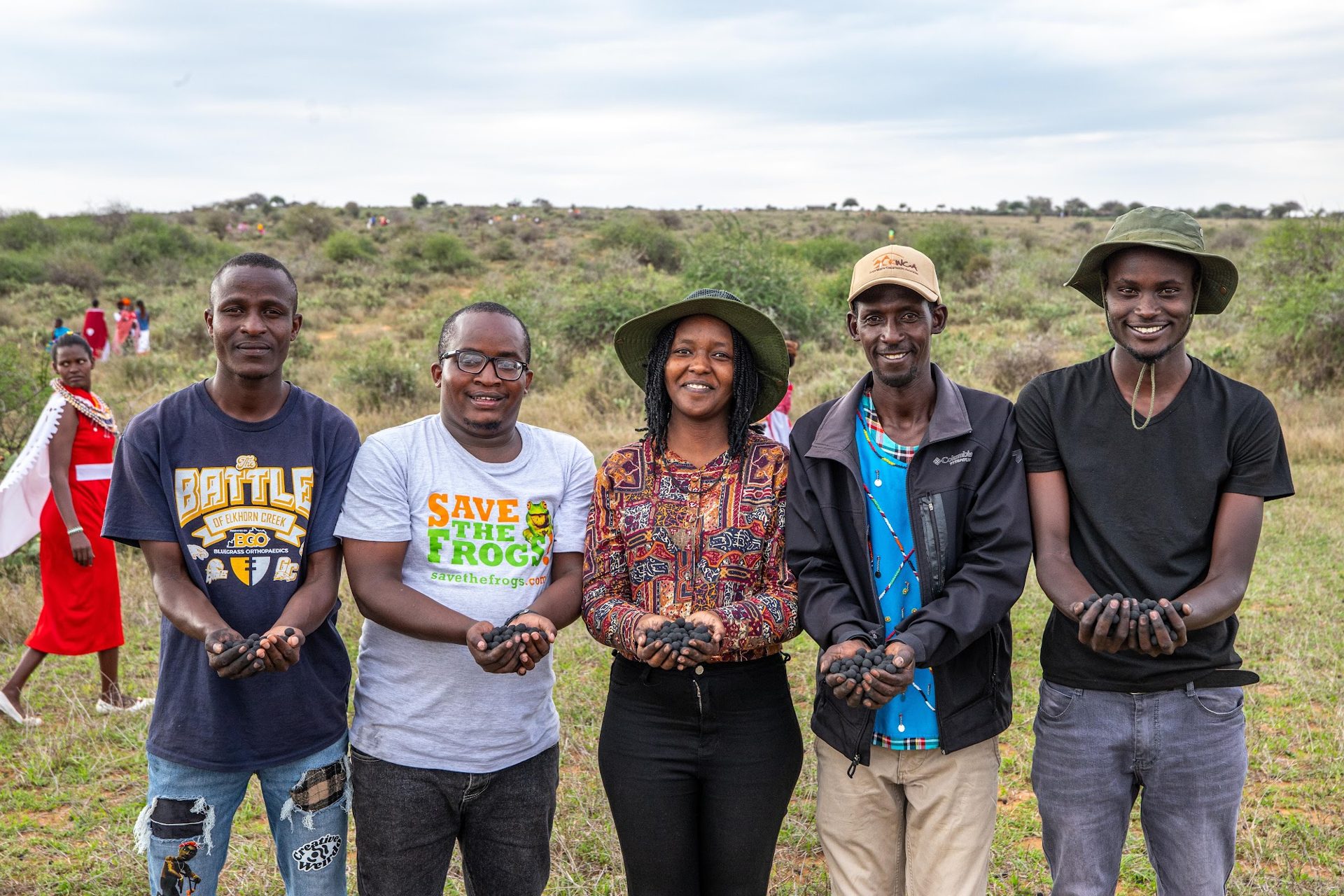
In Nareto’s restoration photographs, community members stand on the land with seedballs in their hands. The task looks simple: distribute seed across damaged ground and wait for rain. But the photograph captures only one part of the work. Before grass can recover, people have to decide how the land will be used while it is recovering. For households whose livestock depend on that ground, the decision has an immediate cost.
Rangeland restoration begins with that tension. Animals need forage now; grass needs time to grow, set seed and establish roots. Neither need can be dismissed. In northern Laikipia, the health of the land and the condition of a herd are closely connected, yet their demands do not always arrive at convenient times. Asking people to rest a grazing area also asks them where their animals will feed instead.
Nareto’s approach brings pastoralist households into planning grazing blocks and rest periods. The purpose is to reduce pressure on damaged areas without treating livestock as if they have no place in conservation. A block is not restored simply because it has been marked on a plan. The agreement has to make sense to those who use it, and there must be enough trust for people to keep it.
That makes restoration a social task as well as a technical one. Different households may depend on the same area in different ways. Someone with few alternatives can experience a closure differently from someone with access to other pasture. Good planning has to hear those differences. The test is not whether a meeting produces agreement on paper, but whether the arrangement can survive the demands of the season.
What a seedball can and cannot do
Bare patches and erosion gullies show why rest alone may not always be enough. Where vegetation has been lost, water can run off instead of soaking into the ground. Soil moves with it. Seed has a harder time establishing on a damaged surface, and grazing can interrupt new growth before it becomes resilient. Repair needs to account for the condition of the ground, not only the number of seeds distributed.
Community members and partners broadcast charcoal-coated seedballs onto degraded patches. The coating helps protect seed before suitable rain arrives. Using indigenous species connects the work to vegetation suited to the landscape rather than an imported picture of what restored land ought to look like. The method offers a practical way for people to participate, but it is still dependent on timing, rainfall and care afterwards.
A seedball is not a guaranteed plant. Some seeds will not establish; newly growing vegetation can be lost if conditions turn dry or grazing resumes too early. Those setbacks should not be hidden behind an attractive planting photograph. They explain why repeat observation matters and why a restoration effort needs patience. The useful question is what survives and strengthens the ground, not merely what was put into it.
Gullies need their own attention. Re-seeding and resting damaged ground must be considered alongside how water moves through it. A patch can look improved while nearby erosion continues to carry soil away. Land users know where runoff gathers and where animals repeatedly pass. Bringing that knowledge into assessment helps connect individual interventions instead of scattering effort across the landscape without understanding how the pieces affect one another.
The work after the planting photograph
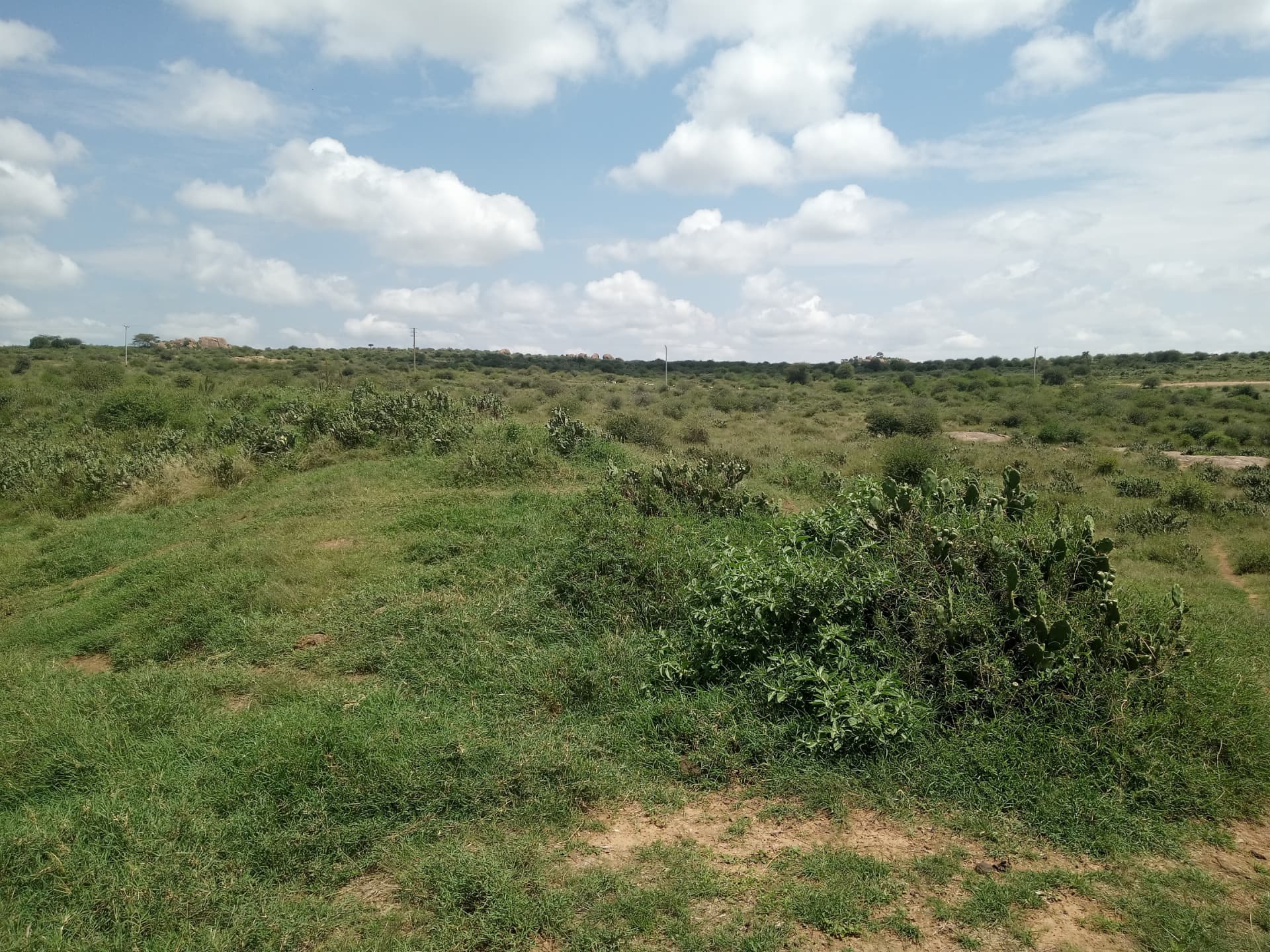
Nareto’s model places restoration within livelihoods rather than separating it from them. Better grass cover can support livestock and wildlife, while healthier soil can retain water more effectively. These benefits are connected, but they should not be treated as instant results. The recovered-landscape image gives this story a visual reference; it does not provide a measured account of every restoration block or prove a particular survival rate.
Monitoring makes the work more honest and more useful. Community members and partners can examine vegetation cover, signs of erosion and the condition of recovering areas over time. What changed after rain? Where did seedlings establish? Where did pressure return? Answers help guide the next decision about grazing and repair. They also make it possible to explain setbacks without abandoning the purpose of the work.
Support is needed for additional community restoration blocks, seedball acquisition and soil and vegetation monitoring equipment. Funding the follow-up is as important as funding the visible activity. A project that can distribute seed but cannot revisit the ground has little basis for judging progress. Community involvement also needs to continue after planting, especially when decisions about reopening pasture affect the people who agreed to rest it.
The lasting achievement is not a landscape kept apart from people. It is land that can keep supporting them, alongside the wildlife that uses it. That requires room for recovery and room for negotiation. The seedball in someone’s hand is the beginning of a practical action; the harder commitment comes afterwards, when a community has to protect new growth while still caring for its herds.