
For Nareto Cricket Warriors, the pitch is more than a place to compete. It is a meeting ground for young people, a bridge between generations and a reminder that protecting a shared landscape begins with belonging to it.
Two batters, one decision
In Nareto’s photograph, two batters run between the wickets. The moment is ordinary enough to anyone who knows cricket, but it holds the reason a team matters: neither player can finish the run alone. They have to judge the same distance, trust the same call and accept the risk together. Here, on land shared by people, livestock and wildlife, that dependence reaches beyond the pitch.
Nareto Cricket Warriors bring sport into a conservation story that can otherwise sound distant from young people’s lives. A discussion about wildlife corridors or grazing pressure asks for attention. A game asks for participation. It gives someone a reason to turn up, meet others and become part of a group before being asked to think about the landscape that group calls home.
The conservancy connects cricket with education, health awareness and community involvement. That does not mean every training session produces an environmental result. A straight bat does not restore pasture; a good catch does not settle a disagreement over water. The connection is less immediate, and more human. Young people need places where they are taken seriously, where effort is noticed and where belonging is not reserved for adults.
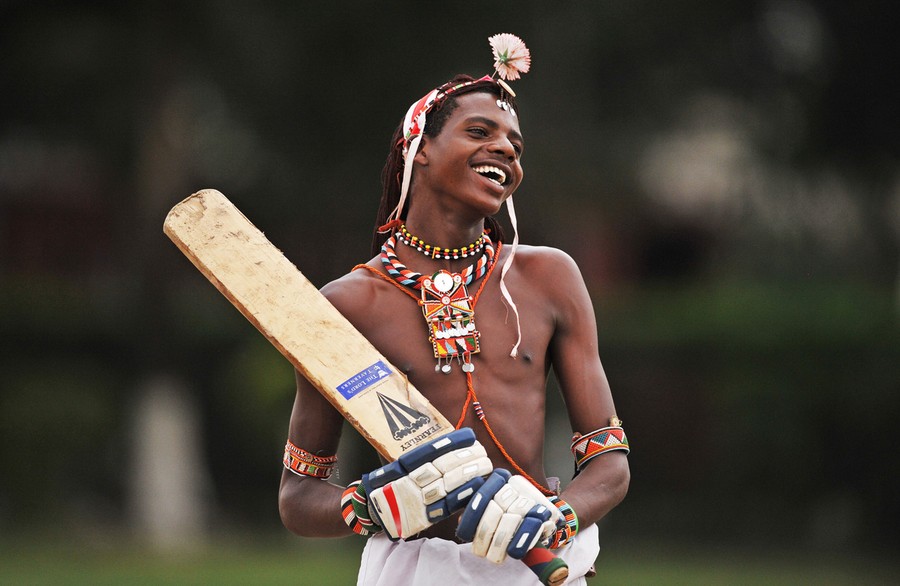
The photographs used with this story keep the people in view: batters in motion, a player holding a bat during training, a coach celebrating on the field. They are not pictures of a policy. They show the activity through which a wider conversation can begin. Before there is a conservation message, there is a person with a place on the team. That order matters.
Who gets a place on the team?
Teamwork is easy to praise and harder to arrange. Cricket needs equipment, coaching and time. Bats, balls and protective gear must be available when players arrive. A tournament needs organisation as well as enthusiasm. Without those practical foundations, a promising invitation can become an occasional event rather than something young people can rely on. Supporting sport means paying attention to these unglamorous needs, not only to the match photograph.
Participation also means asking who is missing. Nareto’s call for support includes opportunities for girls to play. That ambition needs more than a sentence on a programme page. It needs coaching that welcomes new players, access to equipment and arrangements that make participation possible alongside other responsibilities. A team becomes more representative when the people who might otherwise remain at its edge can help shape it.
For young people in a pastoralist community, new interests do not have to replace cultural identity. Cricket can sit alongside family responsibilities, community knowledge and attachment to place. The Warriors’ wider purpose is not to ask players to become someone else. It is to give them another way to build confidence, make decisions and find companions while remaining part of the community they know.
There is room here for learning that does not resemble a classroom. A player makes a mistake, tries again and depends on teammates to keep the game moving. An opponent deserves respect even when the match is close. Those habits are useful beyond sport, but they are not automatic. Coaching and the conduct of adults around the team help decide whether competition becomes a lesson in responsibility or merely a contest.
The landscape beyond the boundary
Beyond the playing area, the same community lives with questions that have no final whistle. How should limited pasture be used? Where can wildlife move without bringing danger closer to homes? How can young people find opportunities without leaving their attachment to the land behind? Sport cannot answer these questions by itself. It can make it easier for people to meet, listen and enter the discussion.
That is the conservation value worth supporting: not a promise that every player becomes a ranger, but a setting in which young people have a voice. Community tournaments can bring conservation conversations to an audience that would not necessarily attend a formal meeting. Training can create regular contact. The strongest link is one people recognise in their own lives, rather than a slogan added to a fixture.
Nareto is seeking support for equipment, coaching essentials, tournaments and conservation education through sport. These are practical requests. Partners can help keep participation open while asking how resources will be shared and how the team’s needs will be identified. The players and people working with them should be part of that conversation. A useful partnership listens before deciding what a successful season ought to look like.
Return to the photograph of the two batters. The run is a brief agreement, made under pressure, between people trying to reach the same place. The Warriors’ wider work asks something similar of the community and its supporters: make room for one another, commit to the effort and keep listening. The score matters to the game. The opportunity to belong matters long after it has ended.