Opuntia stricta is a menace to community grazing land: it takes up space, blocks access to pasture and injures livestock, sometimes with fatal consequences. Nareto calls for coordinated action to control its spread and restore the land.
A meal that tells a harder story
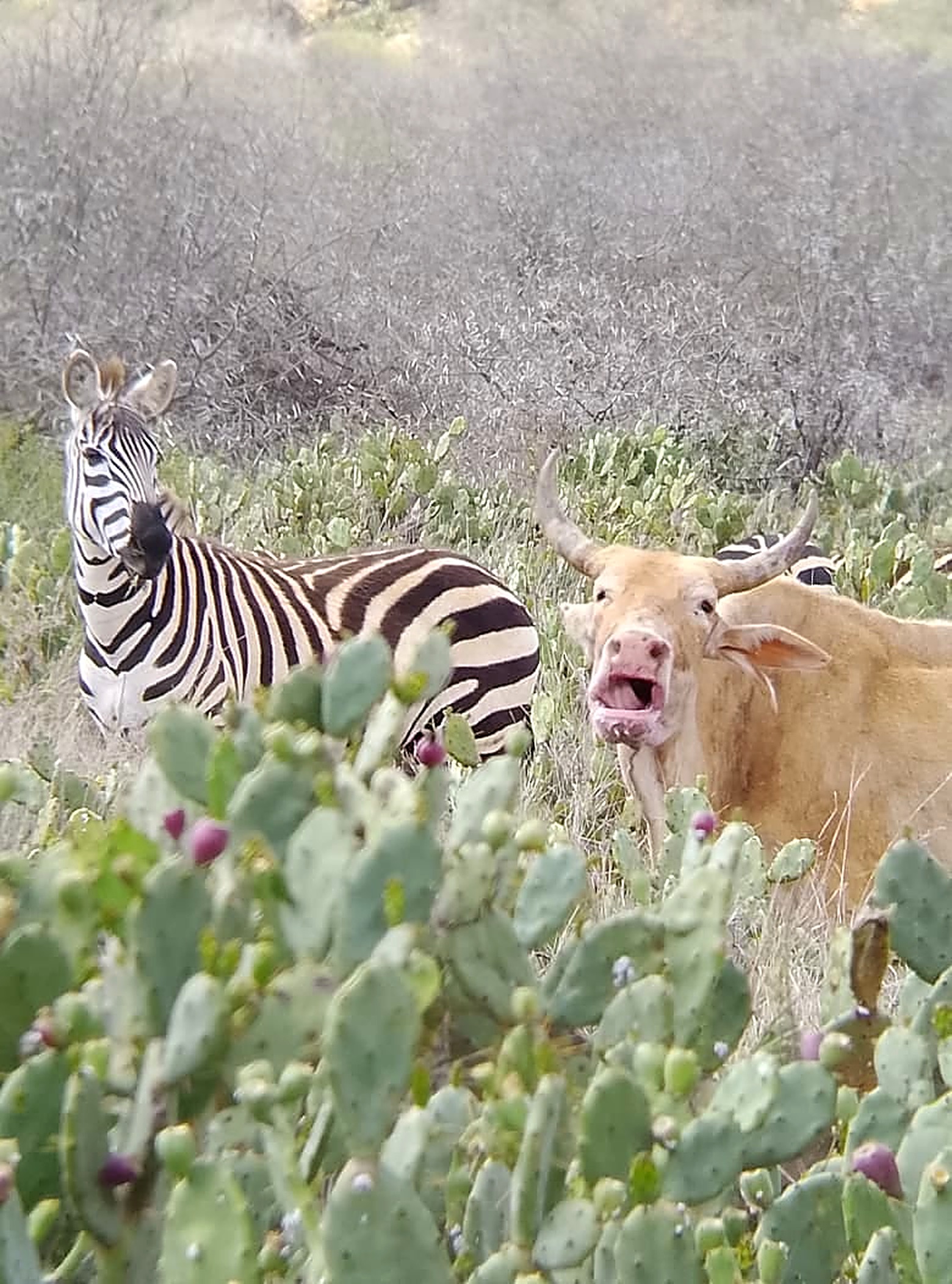
A cow feeds on prickly pear at Nareto during the dry season. Behind it, a zebra stands on the same invaded ground. The photograph brings two parts of this landscape into one frame: livestock that sustain households and wildlife that shares their grazing space. Between them is Opuntia stricta, a plant whose presence is not just a change in scenery. It changes what animals can reach and safely feed on.
For a pastoralist household, grazing land is not empty space waiting for another use. It is where animals find food, where herders judge the condition of a season and where the future of a herd is worked out. When dense cactus occupies that ground, pasture can remain visible but become difficult to reach. The loss is measured not simply in plants, but in usable land.
The photograph is not evidence that this particular cow has suffered an injury, and it cannot tell us how much pasture has been lost. It does show the pressure behind Nareto’s call for action. During dry periods, animals may turn towards prickly pear when other feed is scarce. A plant that appears to offer food can also expose them to harm. Scarcity makes that choice harder to avoid.
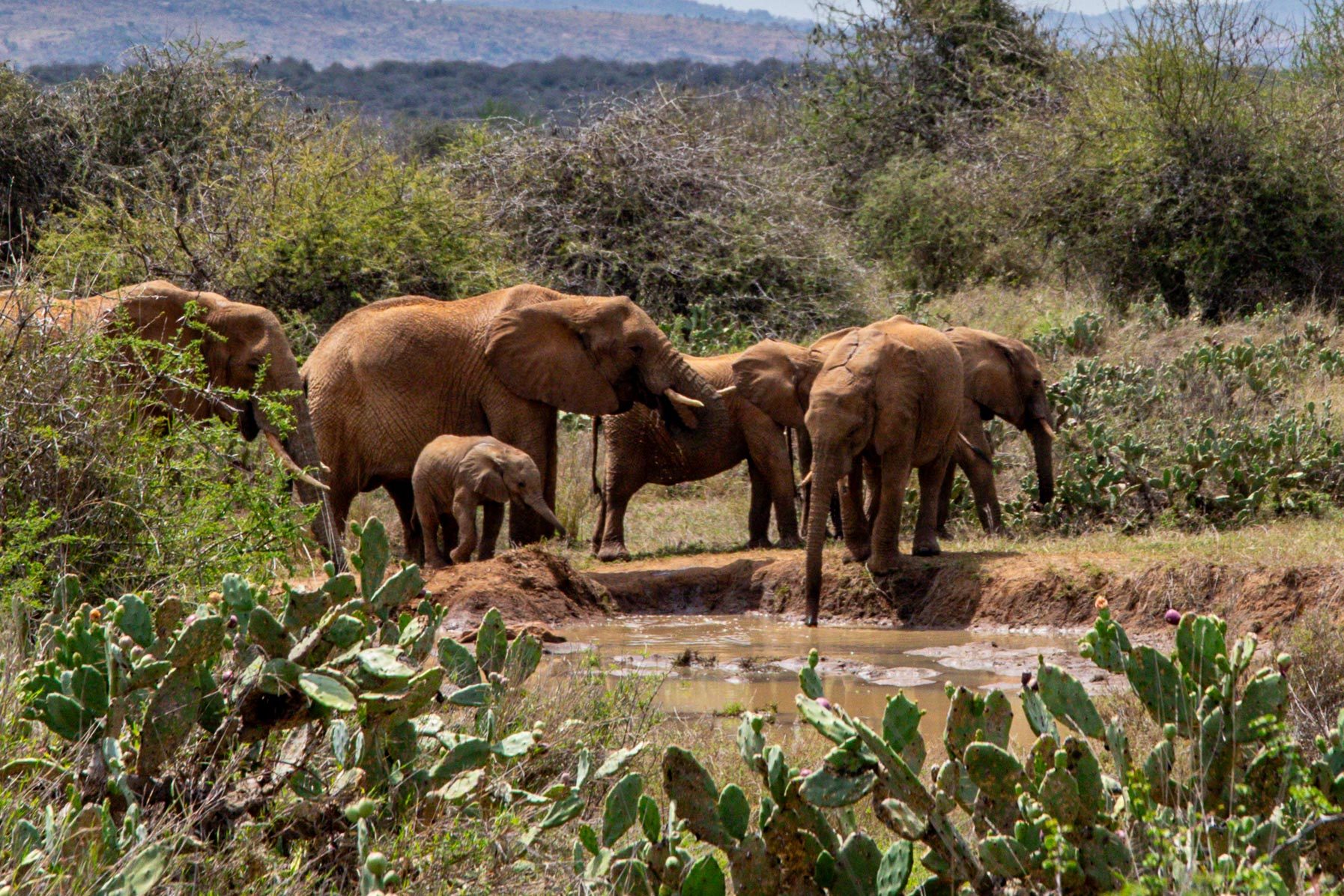
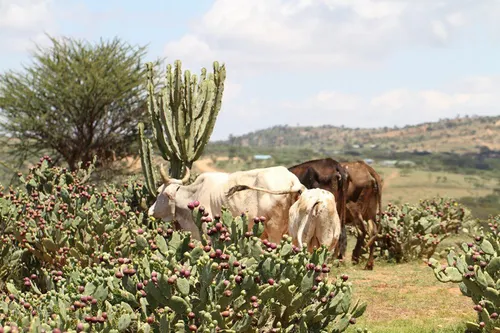
The wider landscape photograph accompanying this article shows how an invasion can occupy extensive ground. Isolated plants and dense stands demand different responses, but both need attention. Waiting until a patch becomes difficult to cross makes the task more demanding. For communities already balancing livestock needs and wildlife movement, invasive-plant control belongs in the daily conversation about land, not at its margins.
The damage goes beyond lost pasture
CABI describes the danger posed by the tiny spines on prickly pear fruit, called glochids. They can lodge in animals’ mouths, throats, stomachs and intestines. Injuries may lead to secondary infection, poor health and death. Larger spines on the pads can also damage eyes when animals reach for grass. These are physical harms, not merely the inconvenience of an obstructed grazing route.
A livestock loss carries consequences beyond the animal itself. Herds support household income and food security; keeping an injured animal alive can also require time and veterinary care. An invasion therefore places pressure on families in more than one way. It removes access to forage while making attempts to feed among the cactus dangerous. Addressing the plant and attending to animal health are connected tasks.
Wildlife uses the same landscape, but a photograph of a zebra beside cattle should not be stretched into a claim about injuries to that animal. The shared concern is space. Dense prickly pear can restrict access to grazing and complicate movement across ground used by different species. Restoring that ground is valuable because the land has several users, not because their needs are always identical.
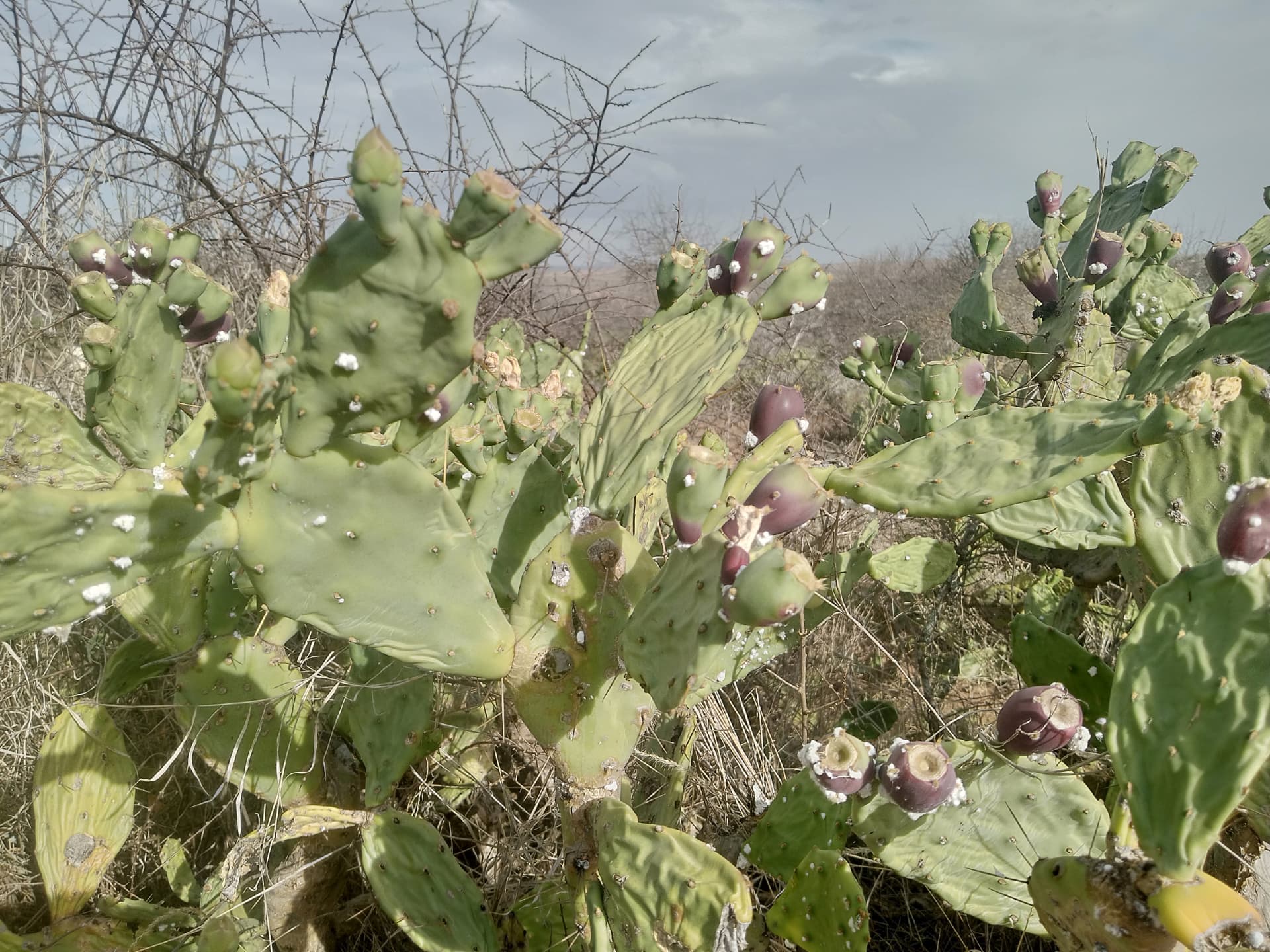
Nareto’s close-up photograph shows cactus pads and fruit affected by the cochineal biological-control insect. That image adds another part of the story: control is possible, but it requires knowledge of the plant and the agent used against it. It is not an invitation to move insects or cactus material without advice. A response intended to repair the land should not create a new problem through poorly coordinated action.
Reclaiming ground, then keeping it open
CABI reports that the screened ‘stricta’ biotype of Dactylopius opuntiae has reduced Opuntia impacts in Kenya and South Africa. Biological control needs qualified specialists and the relevant authorities. Results from elsewhere help inform a response; they do not establish what has already happened at every site in Nareto. Local assessment, appropriate methods and follow-up remain necessary before anyone can claim recovery.
Eradication is Nareto’s stated goal. Reaching it means more than arranging a single clearance day. A community-led plan needs to identify affected areas, understand how people use them and decide where effort can protect remaining pasture. Follow-up matters because cleared ground can be invaded again. Removing cactus without helping native vegetation recover leaves a gap where grazing pressure and erosion may continue.
The conservancy is asking partners to support mapping, specialist-led control, community training, livestock health assessment and restoration. Those requests belong together. Mapping directs work; veterinary outreach addresses harm already faced by animals; monitoring checks whether control lasts. Support is more useful when it covers the quieter work after an intervention, rather than treating the first visible change as the end of the story.
The cow and zebra remain the clearest reminder of what is at stake. Both depend on a landscape that must keep offering space and forage, while the people responsible for livestock carry the cost when it fails. Reclaiming invaded ground is not simply about making a photograph look greener. It is about making land safer and more usable, and keeping the community involved in deciding how that recovery happens.