The Cultural Manyatta artisan cooperative and modern beehives give pastoralist families income that grows with a healthy landscape.
Work held in women’s hands
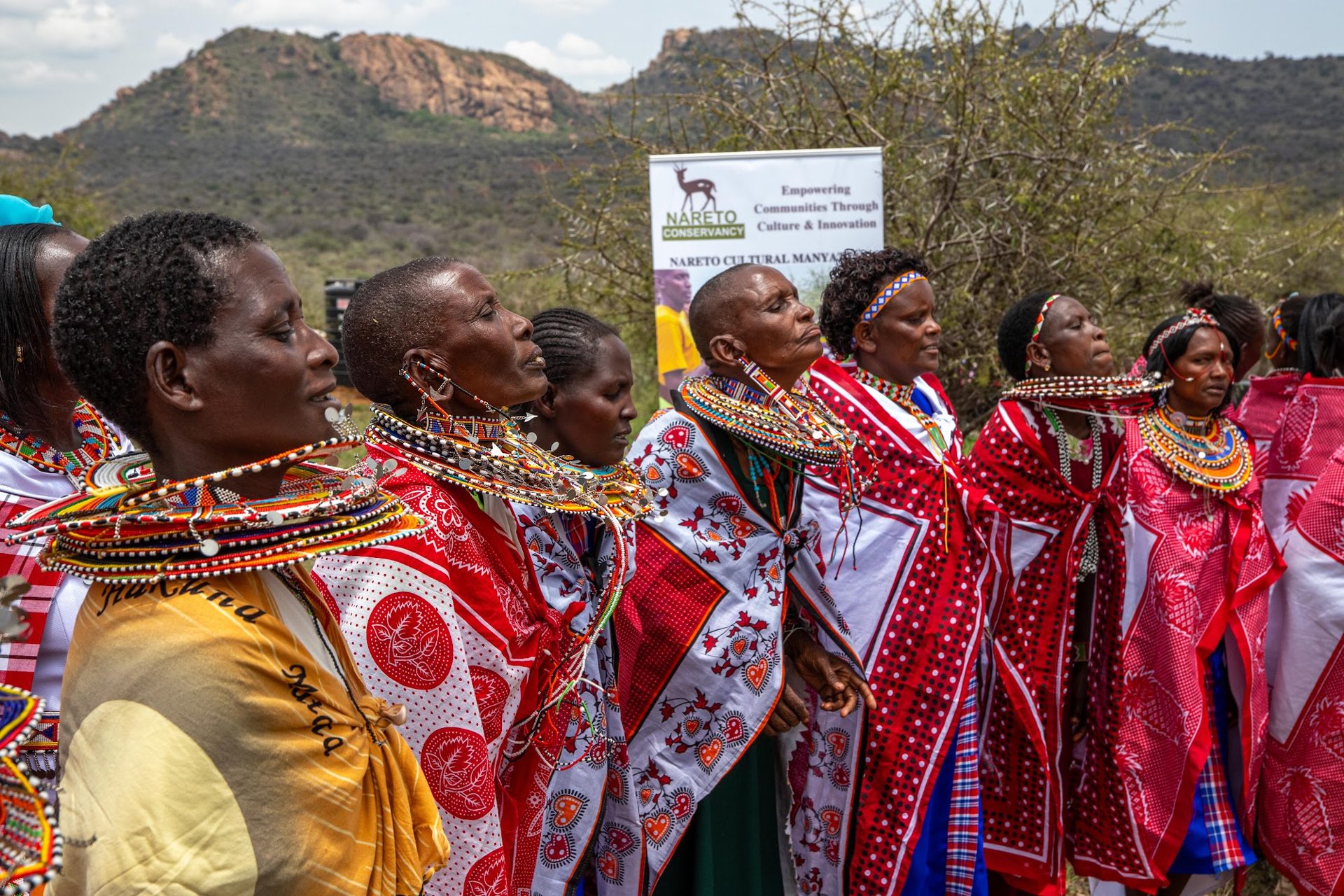
The women in Nareto’s Cultural Manyatta photograph wear beadwork and sing together. Their work belongs to a living community, not simply to a display of objects for sale. The colours and designs carry cultural meaning, while the making requires skill, time and materials. When visitors buy a piece, they encounter something personal and practical at once: a craft tradition and a means of earning from it.
Nareto Women Welfare Groups bring that work into the conservancy’s livelihood programme. Beadwork offers an income route grounded in skills community members already hold. It does not require clearing vegetation to create value. But describing it as a conservation enterprise should not make the labour disappear. A finished bracelet or necklace represents decisions, concentration and hours of work that deserve recognition in its price.
Visitor experiences and craft sales can connect makers with buyers. The opportunity is valuable, but sales are not guaranteed simply because the work is beautiful. Visitors must arrive, products need to reach the right audience and payments must be handled reliably. A livelihood cannot be judged by one busy day or a photograph of a well-stocked display. It needs a route to repeat customers and dependable returns.
For women managing household needs, independent earnings can widen the choices available when an expense arises. That does not mean every sale pays a particular school bill or medical charge; no such individual account is documented here. The broader point is that income in women’s hands matters. Supporting an enterprise should strengthen their ability to decide, rather than assigning those earnings a purpose on their behalf.
Another income, rooted in flowering land
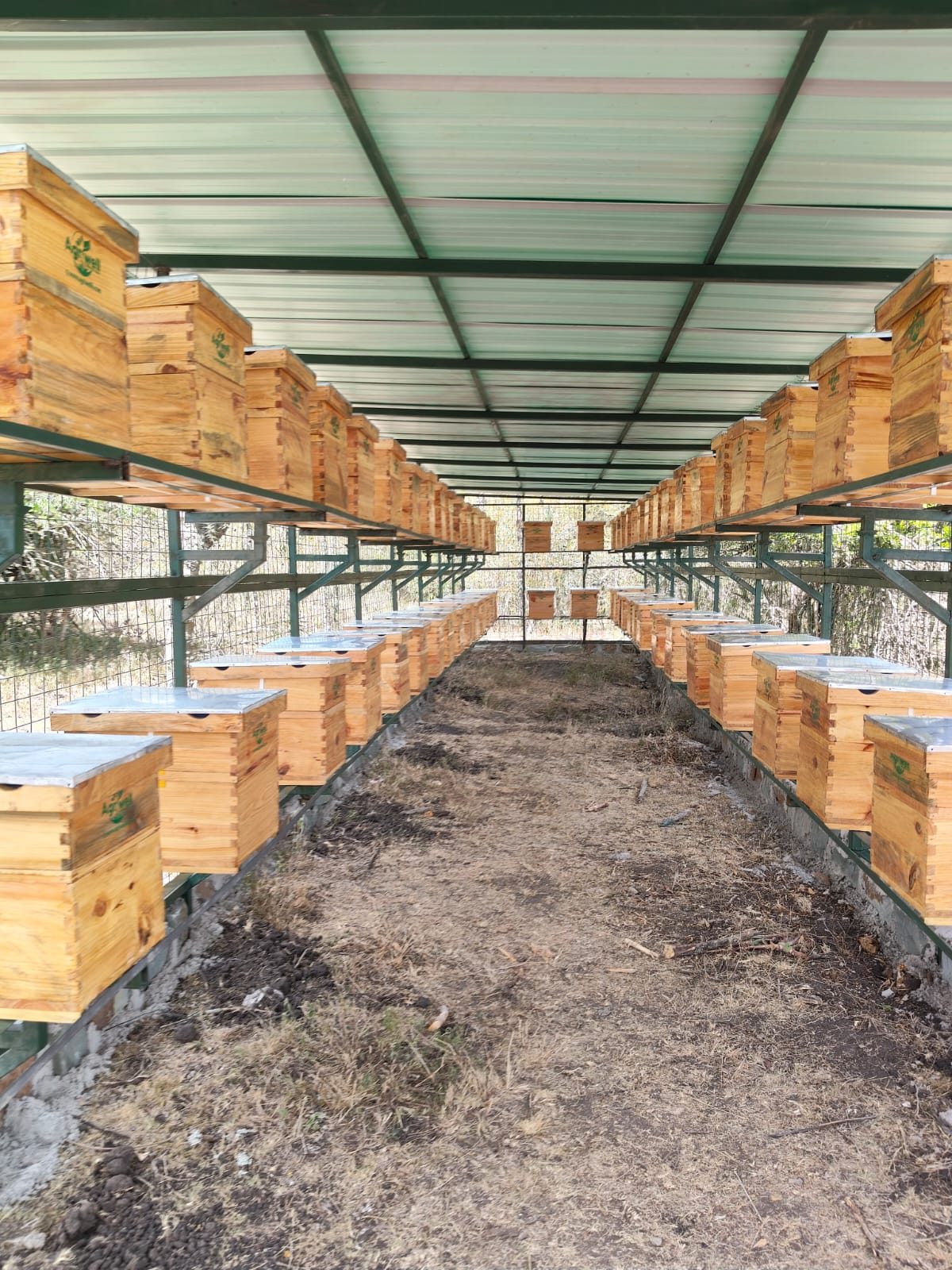
The apiary photograph shows a different kind of production: hives housed in a community beekeeping facility. Nareto identifies support for the facility through the KCF KWCA catalytic grant. The connection to land is direct. Bees need flowering vegetation. A household earning from honey has a reason to value the trees and other plants that help sustain a productive landscape, alongside their value for grazing and wildlife.
Beekeeping is not effortless income. Hives need inspection, equipment needs care and honey must be handled properly. Flowering and weather affect what bees can produce, so an enterprise has to work with seasonal conditions rather than assume a constant harvest. Training and safe working practices matter. A modern facility creates an opportunity, but it does not remove the practical demands of tending bees.
The work also continues beyond a harvest. Processing, clean handling, packaging and storage affect whether honey can be offered as a dependable product. Buyers need clear information and consistent quality. Equipment for those stages is part of Nareto’s request for support. The jar seen by a customer is the end of a longer process, and the people doing that work need resources at each stage.
Beadwork and honey are different enterprises, but both depend on reaching a market. Neither should be treated as a token purchase made only out of sympathy. Craft has workmanship worth paying for; honey has quality that must be maintained. Stronger market links can help recognise those values while keeping producers involved in decisions about pricing, presentation and the terms on which their products are sold.
From a sale to a stronger enterprise
Economic autonomy requires attention to costs. Materials, equipment, packaging and transport all affect what remains after a sale. An enterprise may look active while leaving too little return for the people doing the work. Business and governance training can help groups understand those costs, maintain records and decide how resources will be shared. Those decisions belong with the members, not only with organisations supporting them.
Group work also needs clear arrangements about ownership and responsibility. Who looks after equipment? How are orders allocated? How are shared expenses recorded? The answers need to be understandable to the people whose earnings depend on them. Good governance is not separate from making crafts or keeping bees. It is what helps a group carry on when a new order, a repair or a disagreement arrives.
Nareto is asking partners for market linkages, honey processing and packaging equipment, and cooperative business support. These requests look beyond handing over materials. They address the path between production and income. A useful partnership should listen to makers and beekeepers about the obstacles they face, then help remove those obstacles without taking control of the enterprise away from them.
The conservation argument returns to the people in the photographs. Healthy land can support bees; cultural knowledge can support skilled craft; both can help households earn without clearing the landscape. That connection is strongest when returns are real and members have a say. The aim is not to ask women to carry conservation’s costs through unpaid effort. It is to build work that respects their skill and gives them choices.