By eleven in the morning the heat is already pressing down on the apiary. The women of the Nareto Women Welfare Groups have been here since early, wrapped in white bee suits that hold the warmth like a blanket. Sweat runs under the veils. Nobody complains much. There is honey to take out before the afternoon gets worse.
The chairperson of one of the groups lights a smoker filled with dried cow dung. It smoulders slowly, giving off a thick, grey, earthy smoke. “The bees do not like it, but it makes them calm,” she says, puffing it gently over the hive entrance. “If you go in without smoke, they will chase you all the way home.”
The women laugh. Several of them have been chased home before.
The work inside the hive
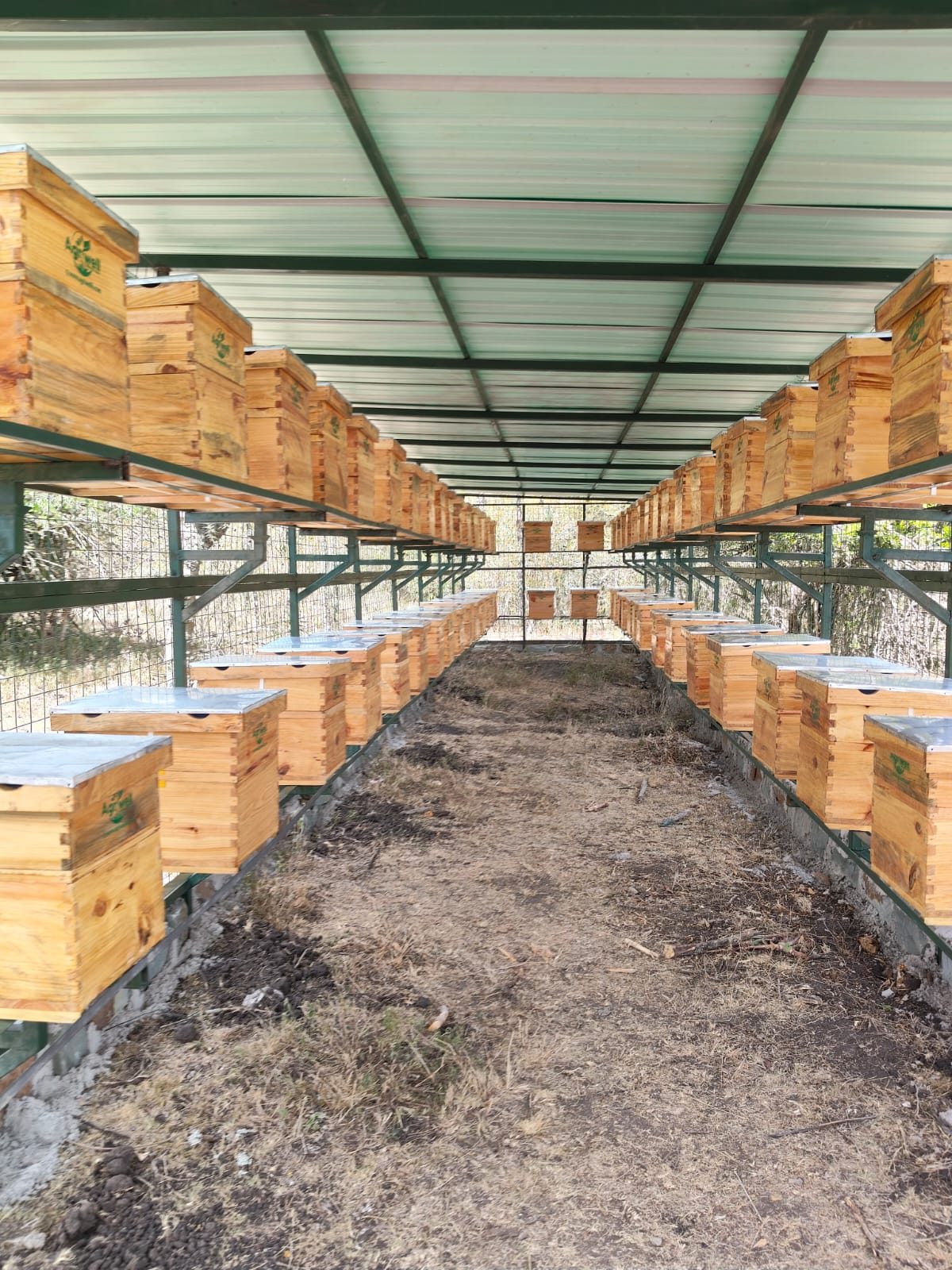
The apiary holds two kinds of hives. The Langstroth hives are square wooden boxes with removable frames stacked in layers. The Kenya Top-Bar hives are long, trough-shaped boxes with wooden bars across the top, from which the bees hang their comb. Each kind has its supporters among the women, and the debate about which is better has gone on for years.
“Langstroth gives you more honey, and the comb goes back,” one member says. “But the top-bar is cheaper, and we can repair it ourselves.”
Opening a hive is careful, slow work. The lid comes off. Smoke goes in. Bars or frames are lifted one by one and held up against the light to see whether the comb is capped with wax, which means the honey inside is ripe. Uncapped comb goes back. Taking honey too early means it will ferment and spoil, and a whole batch can be lost.
The bees here feed largely on acacia blossom from the surrounding thorn-scrub. When the rains have been good and the trees flower well, the honey is pale and mild. In a dry year there is less of it, and the women have learned to leave enough in the hive so the colony survives until the next flowering.
From comb to bottle
Harvested comb travels back to a shaded processing space in sealed buckets, away from dust and curious bees. There it is cut, crushed and strained through fine cloth. Raw honey runs slowly into clean containers, thick and golden, carrying the smell of the bush.
Quality checks matter. The women look for clarity, check for wax fragments or debris, and keep each batch separate so it can be traced back to the hives it came from. Jars and bottles are cleaned, filled, sealed and labelled by hand.
“A buyer who finds dirt in one bottle will not come back,” the chairperson says. “So we check, and then we check again.”
Honey that passes goes on sale locally and through partners, and some of it reaches visitors through the Nareto shop. Beeswax is kept too, for candles and other products, because nothing from the hive is wasted.
Money that stays in women’s hands
Ask the members why they keep bees and the answer comes back quickly, and it is not about honey.
“School fees,” says one mother of four. “My eldest is in Form Three. Before the bees, every term I was going from house to house asking for help. Now, when the letter comes from the school, I have something.”
For many households in northern Laikipia, livestock is the main form of wealth, and decisions about livestock are often made by men. Honey income is different. It is earned by the women, kept in the group’s records, and shared among members. It arrives in cash, and it can be used when it is needed.
That matters most in emergencies. A child with a high fever needs transport to a clinic and money for treatment. A grandmother needs medicine. When the nearest health facility is far and the trip costs real money, having savings from the group can decide how quickly a family gets help.
“We do not wait for anyone now,” one member says. “If my child is sick, I go.”
The groups also save together and lend to members in small amounts. Meetings are held under trees, with records kept in exercise books, and arguments are part of the process. Who missed a harvest day? Should the group buy new hives or repair old ones? These conversations are slow, but they belong to the women.
Why bees and conservation belong together
There is another reason the hives sit where they do. Bees need flowering trees. A woman whose income depends on acacia blossom has every reason to stop someone cutting those trees for charcoal. Some hives also sit along routes that elephants use, and elephants tend to avoid the buzzing of disturbed bees.
By late afternoon the suits come off and the buckets are counted. The smoker is emptied and left to cool. It has been a good day, though not a big one. Everyone knows the next harvest depends on rain that nobody can promise. Still, the women walk home with something in hand, and plans already forming for what it will pay for.