In the dry months the river beside the settlement is not a river at all. It is a wide strip of pale sand between two banks of thorn-scrub, cracked at the edges, crossed by the tracks of goats, cattle and elephants that come looking for anything left underneath. Children dig shallow holes in it with their hands. Sometimes there is a little water at the bottom. Often there is not.
“When the lagga is dry like this, everything comes to the borehole,” says a member of the community water committee. “People, cows, goats, camels, and at night the elephants. All of them. So we must be organised.”
A solar pump and a strict timetable
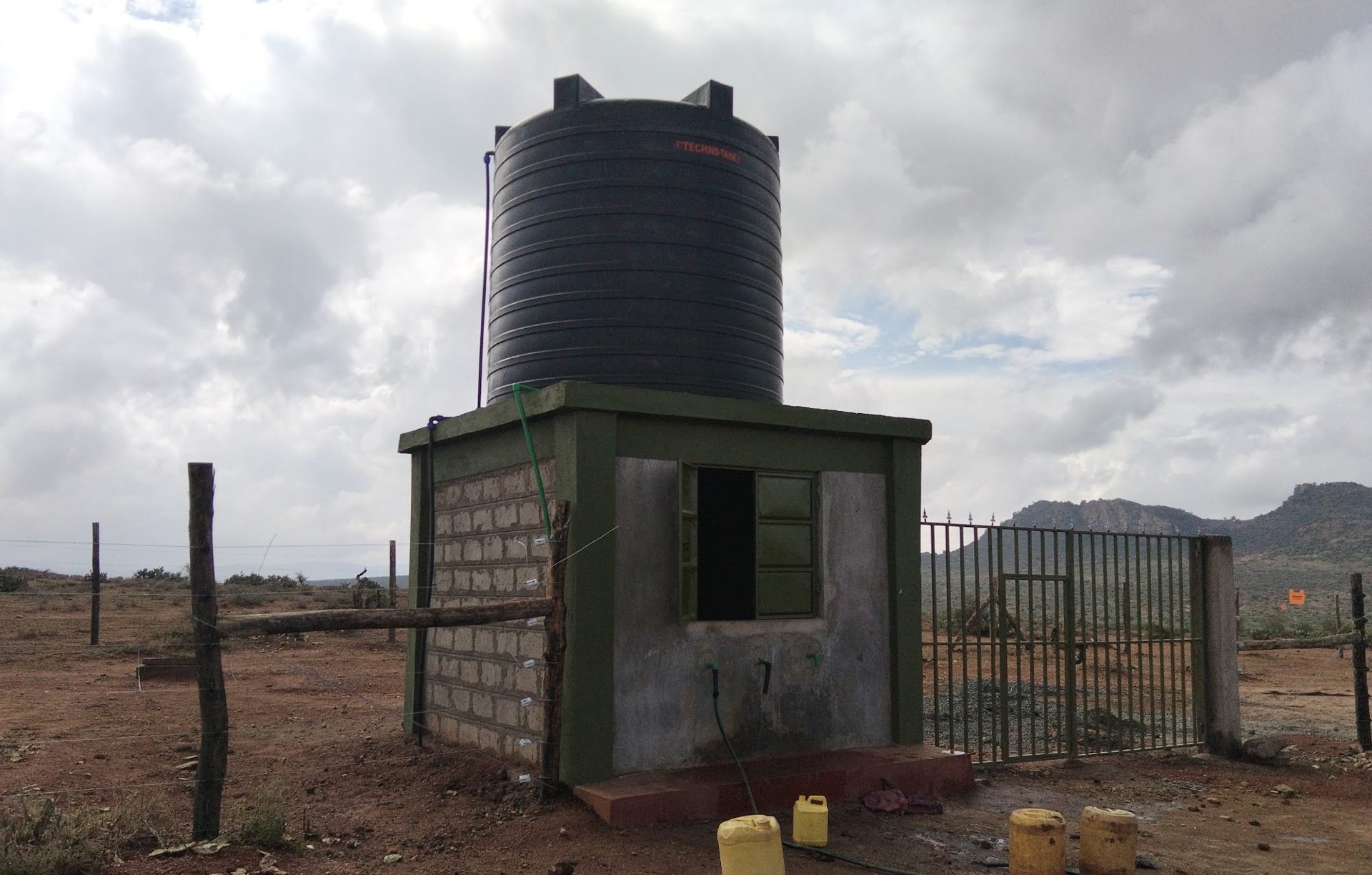
The borehole sits on a slight rise, a few hundred metres from the nearest homesteads. Solar panels on a steel frame power the pump that draws water from deep underground into a raised tank. On a clear day the panels work well. On a cloudy day the flow slows, and the committee has to adjust.
Water here runs on a timetable, and the timetable is the committee’s main job.
The day starts with households. From first light, while the air is still cold, women and girls arrive with yellow jerrycans tied to donkeys or carried on their backs. They queue at the taps. A committee member keeps watch, makes sure the line moves, and settles the small arguments that come up when everyone is in a hurry.
“The morning is for people,” the committee member says. “Clean water for drinking and cooking first. That is the rule. If the animals come first, the people will find mud.”
By mid-morning the household rush thins. Then, around midday, the herders come. Cattle and goats arrive in long, dusty lines, bells clinking, driven by young men and boys who have walked them in from the grazing areas. They drink from troughs fed by the tank, one herd at a time, in an order the committee agreed in advance. Herds that arrive out of turn wait.
The hard part is the people
The pump is the easy part. People are harder.
Every season brings new pressures. A family with many cattle wants more time at the troughs. A herder from a neighbouring area arrives with his animals and asks for water. Someone breaks a tap and nobody wants to pay for the repair. A committee meeting can run for hours under a tree, with elders, women and young herders all speaking.
“Sometimes we shout,” a committee member admits. “But at the end we agree. Because if we do not agree, the borehole will be finished in one season, and then everyone loses.”
Users contribute small amounts toward maintenance, and the committee keeps a record. Spare parts, cleaning the troughs, replacing worn pipes, fixing panels after a storm: all of it costs money, and all of it is needed to keep water flowing. A borehole without care breaks down. Then families walk for hours to the next one.
After dark, the troughs belong to the wild
When the sun drops behind the hills and the last herd is driven home, the committee does something that surprises visitors. It leaves the troughs open.
After dusk, elephants come. So do zebra, impala, gazelle and the occasional buffalo. They drink in the dark, quietly most nights, and are gone before the first jerrycans return in the morning.
The decision was not automatic. In the past, thirsty elephants that found no water would break pipes, damage tanks, or push into homesteads looking for anything they could drink. Keeping a reliable place for wildlife to water, at a time when people are home, has reduced that damage.
“The elephant will drink somewhere,” one elder says. “Better it drinks here at night, at the trough, than it breaks our tank in the day. We give it its time, it gives us our time.”
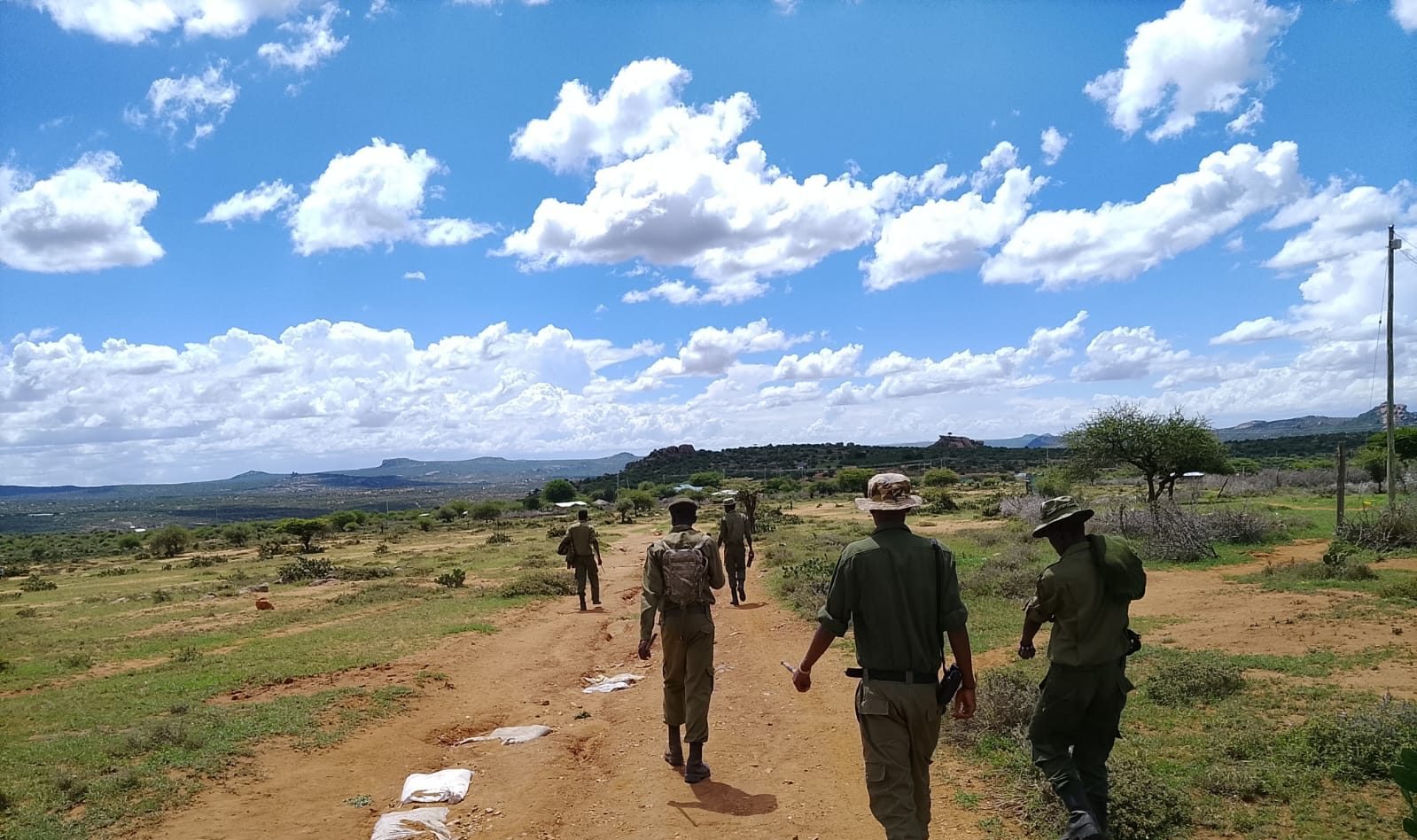
Community scouts keep watch on the area. They report when large herds are moving toward the water and warn families who live nearby. In the morning, the committee checks the troughs and pipes for damage before opening the taps again.
One water source, many lives
None of this is perfect. In the worst droughts, the water table drops and the pump struggles. Cloudy weeks mean lower flow. Disputes come back, and the timetable has to be renegotiated. The committee knows the borehole is a fragile thing, and that more water points and better storage are needed.
But walk past the borehole at dawn and you see the system working: jerrycans filling, donkeys waiting patiently, a committee member counting the line. Come back at noon and the cattle are drinking. Come at night with a torch and you might catch the shine of an elephant’s eye at the trough.
One source. One timetable. Many lives depending on people to share it fairly.