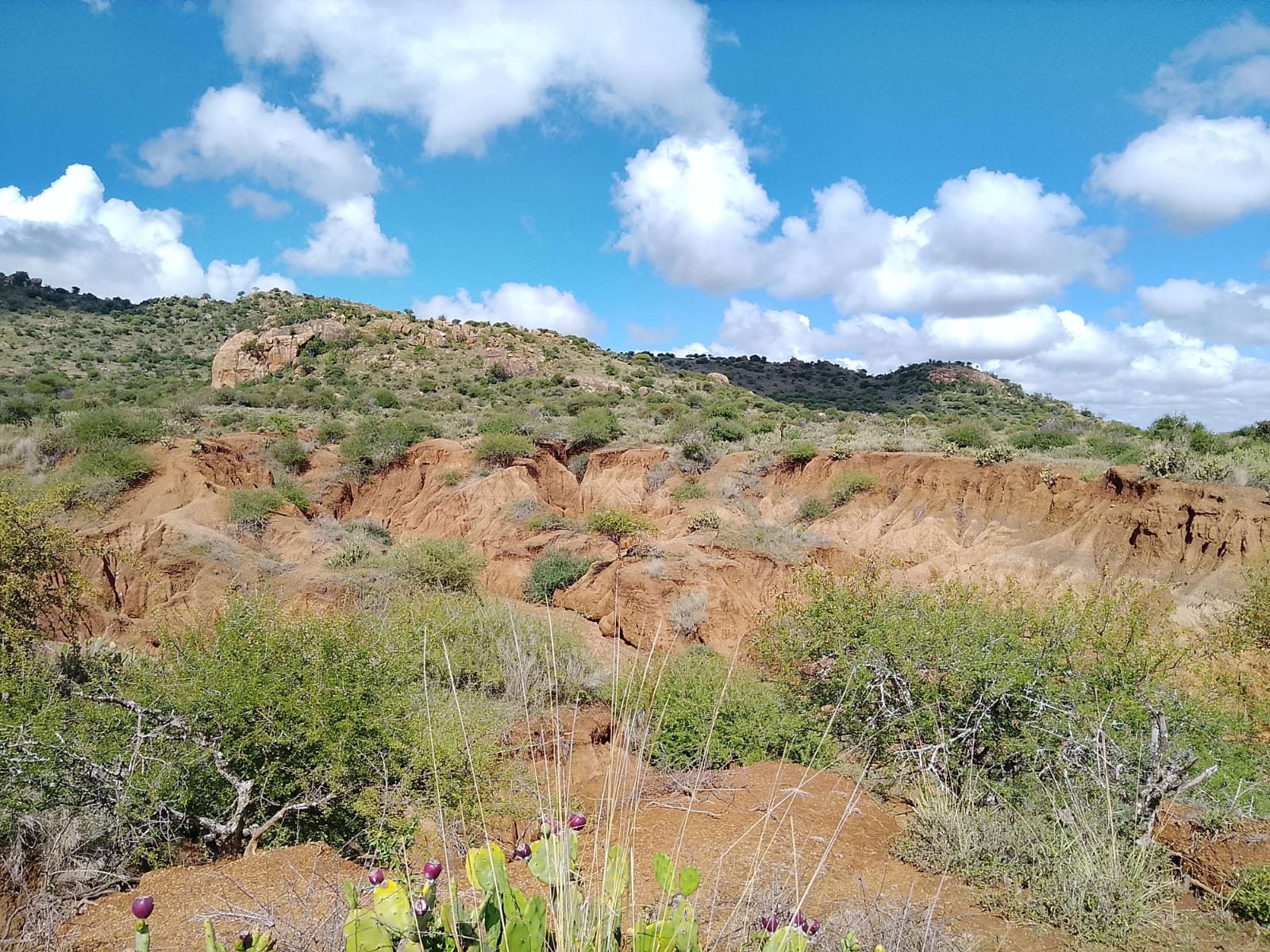
The ground here does not give when you step on it. It is hardpan: bare, grey-brown soil packed so tight by years of hooves and heavy rain that water runs straight off it instead of soaking in. Small gullies cut across it where the last storm carved channels. A few tufts of grass cling to the edges. In the middle, nothing.
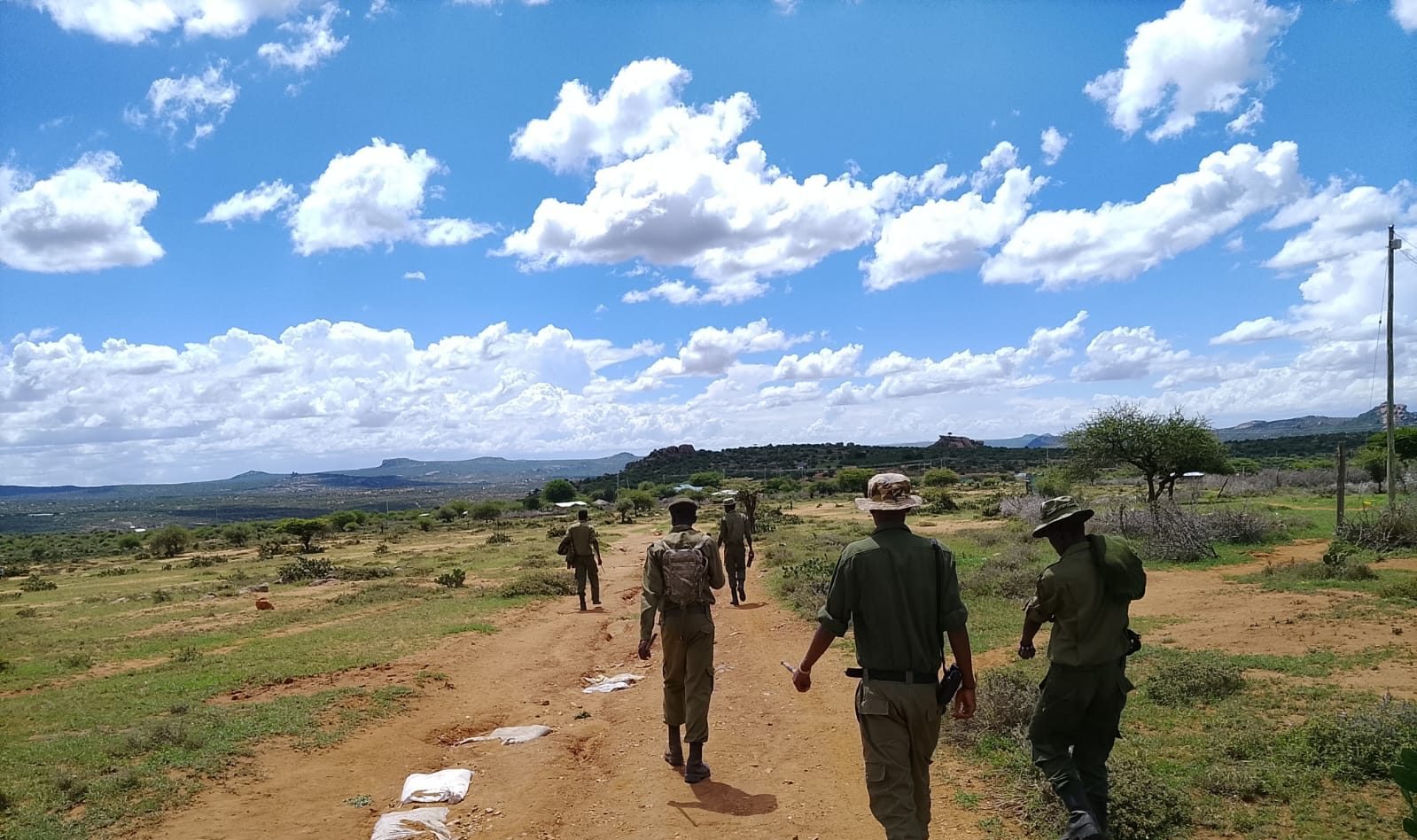
A line of community members walks slowly across this ground, spaced a few metres apart. Each carries a bucket. Several carry slingshots.
Seedballs, slingshots and patience
Inside the buckets are seedballs, small dark pellets about the size of a marble. Each one holds seeds of perennial grasses such as Cenchrus ciliaris, African foxtail grass, wrapped in a coating of charcoal dust and clay. The coating protects the seed from ants, birds and the heat of the sun until rain comes. When it rains, the ball softens and the seed germinates in a small pocket of moisture.
“If you throw only seed on this ground, the birds eat it before evening,” says one of the restoration team, rolling a seedball between her fingers. “This one waits. It is patient. Like us.”
Some seedballs are scattered by hand, some pressed into scratched patches of soil. The slingshots carry them further, into gullies and slopes that are hard to reach on foot. The young men treat it partly as a competition, aiming for the far side of a gully. The older women are more careful, placing seedballs where water collects after rain.
It is tiring work in the heat, and the results are not instant. Some seasons the rain fails and most of the seedballs sit unchanged. Other seasons a light green fuzz appears across the hardpan within weeks, and the team walks out just to look at it.
Clearing the way
Restoration is not only about planting. In many areas, invasive and woody plants have taken over ground that once held grass. Thick bush and spreading prickly pear block light and space, and they leave little room for grass to come back.
Teams clear selected patches by hand, cutting back bush and laying the cut branches across the bare soil. The branches slow down runoff, trap seed and organic matter, and give young grass a little shade and protection from grazing animals. Thorny branches especially keep goats away from fresh shoots.
“The branch is like a small fence for the grass,” one elder explains. “The goat sees the thorns and goes somewhere else.”
The cleared areas are chosen carefully. Some trees stay because they provide shade, fodder and flowers for bees. The aim is not to strip the land, but to open it up so grass can recover.
The meeting under the tree
The hardest part of restoration does not happen on the hardpan at all. It happens at community meetings, usually under a large acacia, with elders seated in a half circle and herders standing at the edges.
New grass needs rest to survive. If cattle and goats graze it in its first season, it never sets seed and never roots deeply. So restoration only works if particular grazing blocks are closed for a time, sometimes a full season or longer.
For a pastoral community in a dry landscape, that is a very big request. Grazing land is life. Closing one area pushes animals onto others. In a dry year, every patch of grass counts.
“A young man stood up and said, ‘My cows are hungry now, not next year,’” recalls one participant from a recent meeting. “And he was right. That is the difficulty. We are asking people to be hungry a little now so we are not hungry a lot later.”
The discussions are long. People bring up old disagreements, ask who will watch the closed areas, and question whether neighbouring groups will respect the boundaries. Elders draw on customary grazing practice, when certain areas were set aside for the dry season, to explain why rest makes sense. Agreements are made slowly and sometimes changed.
When a block is finally closed, it is a shared decision. Scouts and herders help monitor it. If animals break in, the matter goes back to the elders.
What recovery looks like
Recovery is gradual. In good years, rested blocks grow taller grass than the land around them, with seed heads swaying in the wind by the end of the rains. Soil begins to hold water again. Small animals and birds return. When the block is reopened, herders often notice their animals do better there.
In bad years, progress stalls. Drought undoes months of work. Some seedballs never sprout. Some agreements fail. The team counts setbacks along with successes.
Still, walk the edge of an older restoration site and the difference is plain: on one side, bare hardpan; on the other, a thick mat of perennial grass, roots holding the soil in place. It is slow, unglamorous work, done by hand and by agreement. And it is changing the land, one rested block at a time.